

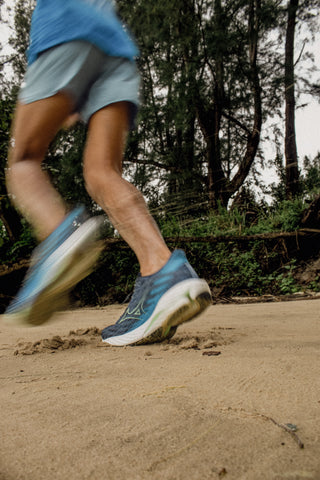
You’ve spent the last six months preparing for this event — training hard, staying disciplined, and keeping your vision locked on the finish line. You’ve sacrificed, planned every detail, nailed your nutrition, slept eight hours a night, and balanced your training load and recovery perfectly. You’ve done everything right — yet in the final moments, something feels off.
You should be performing better. You know you can go harder, but your body won’t respond.
Amid the heat and humidity, the sweat, the brain fog, the heavy legs, and the pounding heart rate, it hits you — something’s missing. You drank plenty of water. You carb-loaded. You followed the plan. So how did it go wrong?
The answer reveals itself in the thick Southeast Asian air. The water-only strategy wasn’t enough. It did part of the job — but left you vulnerable to cramping, overheating, and fading power.
Flash back to the starting line: you remember seeing other competitors tear open small white sachets, pour them into their bottles, and down them quickly. You thought it was a fad — until those same runners surged past, one after another, looking fresh while you battled the weight of fatigue. Maybe they were onto something.
Later, one of them shares the secret: an electrolyte hydration mix — the edge you didn’t know you were missing, especially in Southeast Asia’s relentless heat and humidity.
Electrolytes are often thrown around as a buzzword in fitness and performance circles. But for anyone training, competing, or simply staying active in hot, humid climates, they’re far from hype — they’re essential. If you want to perform at your best, recover faster, and adapt to the heat, electrolytes might just be your most powerful — and most overlooked — training tool.¹
The Challenge of Southeast Asia’s Climate
In Southeast Asia, relative humidity often exceeds 80%. Unlike dry heat, humid air reduces sweat evaporation, making it harder for the body to cool itself. This may increase the risk of heat stress and higher fluid demands — though electrolyte losses can vary significantly between individuals⁶.
So, why is this important? Take a look at the table below:
|
Category: |
Key Insights: |
Common Symptoms or Risks: |
|
High Heat + Humidity = Higher Losses |
Relative humidity in Southeast Asia often exceeds 80%, reducing sweat evaporation and making it harder for the body to cool itself. This increases fluid and electrolyte demands and raises the risk of heat stress. |
• Faster fatigue |
|
Risks of Heat-Related Illnesses |
Insufficient fluid and electrolyte replacement can quickly lead to heat exhaustion, dehydration, or more serious conditions. |
• Heat exhaustion |
|
Signs of Electrolyte Imbalance |
Electrolyte losses vary between individuals, but common signs appear after prolonged sweating or heat exposure. |
• Muscle cramps |
Understanding Electrolytes and Their Role in Hydration What Are Electrolytes?
Electrolytes are essential minerals that carry an electric charge and are involved in key physiological functions.
They help regulate:
- Fluid balance
- Nerve signaling
- Muscle contraction
- Acid–base (pH) balance
Most people meet their electrolyte needs through a balanced diet. However, intense training, high heat, humidity, or illness can increase losses — requiring replenishment through diet and/or supplementation, as needed¹. Strategic electrolyte replenishment may be the missing link in your training repertoire.
The Essential Electrolytes and Their Functions
|
Electrolyte: |
Function: |
Why it Matters: |
|
Sodium (Na⁺) |
Regulates blood volume, blood pressure, and muscle and nerve function¹ |
|
|
Potassium (K⁺) |
Works with sodium to regulate fluid inside cells and transmit nerve signals² |
|
|
Calcium (Ca²⁺) |
Supports nerve transmission, muscle contraction, and bone health³ |
|
|
Magnesium (Mg²⁺) |
Involved in over 300 enzymatic reactions, including muscle and nerve function⁴ |
|
|
Phosphorus (P) |
Plays a central role in ATP production and bone structure⁵ |
|
Electrolytes interact closely. An imbalance in one can have a knock-on effect on the others.
Reinforcing the importance of intentional strategy.
How Electrolytes Enhance Hydration
Electrolytes act as conductors, allowing your cells to absorb and retain water effectively. Without them, plain water can pass through your system without being properly utilized.
When hydration is paired with electrolytes:
- Fluids are absorbed faster
- Muscles function optimally
- Thermoregulation improves = allowing sustained performance in high heat environments = better performance, safer intensity, and stronger endurance in the heat.
- Fatigue and cramps are reduced
Hydration Guidelines for Southeast Asia’s Heat How Much Water Should You Drink?
As a general starting point, aim for 35–45 ml/kg of body weight daily adjusting based on activity and climate. During intense or prolonged activity in the heat, an additional 500–1000 ml per hour may be needed.
Simple Hydration Monitoring Tools:
- Urine color:
Light = Hydrated
Dark yellow = Dehydrated
- Sweat rate test: Weigh yourself before/after training
- Don’t wait until you’re thirsty — thirst lags behind need
Source: ACSM Exercise & Fluid Replacement Guidelines⁸
Rate of Sweat & Electrolyte Loss
Sweating is your body’s mechanism for cooling; however, with sweat loss comes water and electrolyte loss, both integral to performance, function, and recovery.
|
Electrolyte |
Men (approx.) |
Women (approx.) |
Role in the body |
|
Sodium (Na⁺) |
~1000–4500 mg/h |
~600–2500 mg/h |
Fluid balance, nerve function, and muscle contractions |
|
Potassium (K⁺) |
~200–500 mg/h |
~120–300 mg/h |
Cellular hydration, muscle recovery |
|
Magnesium (Mg²⁺) |
~5–20 mg/h |
~3–12 mg/h |
Energy metabolism, muscle and nerve function |
The Bigger Picture: Hydration Supports More Than Recovery
For active individuals, whether amateur, recreational, or elite athletes, properly replacing electrolytes is key to sustaining performance. Recovery is a core component of long-term performance. When the body becomes dehydrated, plasma volume drops, heart rate rises, and thermoregulatory strain increases. In this state, the body diverts resources toward maintaining core temperature and circulation, leaving less capacity to respond to the training stimulus. This means workouts may feel harder, intensity becomes harder to sustain, and the quality of training can decrease, all of which can limit adaptation over time. Repeated sessions performed in a dehydrated state can also contribute to cumulative fatigue, increasing the risk of nonfunctional overreaching, in which performance plateaus or temporarily declines.
Therefore, proper hydration and electrolyte intake support:
- Cognitive clarity: maintaining focus and decision making (e.g., knowing when to appropriately push the pace in an event race).
- Endurance and adaptation: sustaining power output and delaying fatigue.
- Thermoregulation: keeping core temperature stable in the heat.
The American College of Sports Medicine (ACSM) reports that losing just 1-2% of body weight in fluids can reduce aerobic performance by 10-15%⁸.
Even Mild Dehydration (1-2%) Can:
- Decrease aerobic capacity
- Delay recovery
- Increase perceived exertion
- Raise the risk of cramps and fatigue¹⁰
Dehydration Signs and Symptoms
|
Severity |
Common Symptoms |
Typical Physical Signs |
|
Mild (1–3% body weight loss) |
Thirst, dry mouth, slight tiredness |
Blood pressure remains stable, mild increase in heart rate, and slightly dry mucous membranes |
|
Moderate (4–6% body weight loss) |
Dizziness, muscle cramping, irritability |
Drop in blood pressure when standing, noticeable increase in heart rate, and slower capillary refill |
|
Severe (≥7% body weight loss) |
Confusion, extreme fatigue or drowsiness, minimal urine output, and possible signs of shock |
Very low blood pressure, rapid heartbeat, altered awareness, and cool or clammy skin |
If you train frequently in the heat, sweat testing or tracking fluid loss over time can help personalize your hydration strategy.
When to Replenish Electrolytes
By now, it should be well-established that hydration requires planning and intent. During extended or intense sessions, sweat loss leads to significant fluid and sodium loss. Sessions over 1.5 hours should contain 400-1100mg sodium per litre to optimise fluid and hydration status. For training lasting >1.5 hours, or high-intensity training, in high-heat or high-humidity environments, research-backed hydration guidelines suggest using an electrolyte drink that contains 400-1100 mg sodium per litre, plus potassium and magnesium in moderate amounts.⁷⁸⁹
Sports Nutrition Guidelines Recommend⁹:
For activity lasting >60 minutes in heat:
● Before: 500ml of water mixed with electrolytes 1–2 hrs prior
● During: 150–250 ml every 15–20 minutes
→ Target 400-1100mg sodium/L, 150-300mg potassium, 5-20mg magnesium.
● After: Rehydrate with 1.5 L per kg of weight lost
The Strategic Difference: Why Realm is Built for S.E.A. Training
Hydration isn't just about water; it's about the quality of the fluid you put into your body. When choosing an electrolyte source, especially for long-duration or intense activities in the heat, you must make an informed decision.
Realm’s Electrify is formulated to support fluid absorption, muscle recovery, and hydration during heat exposure — using research-backed ingredients and third-party testing. It’s a science-aligned option for those training hard in humid climates.
Realm stands apart with:
- Performance-first formulation — Delivers an optimal amount of minerals to support rapid hydration from the high sweat rates in hot and humid climates.
- Clean, No Gut Distress: Free of unnecessary additives, helping prevent the common mid-workout stomach issues.
- Uncompromised transparency — Every batch is third-party tested, ensuring purity and bioavailability—what’s on the label is what fuels your body.
Whether you're training in the heat, recovering after exertion, or navigating the demands of daily life in Southeast Asia, Realm’s Electrify helps ensure your hydration supports your performance and long-term health.
Conclusion: Hydrate with Purpose, Perform with Precision
In Southeast Asia’s heat, hydration isn’t just a wellness tip — it’s a physiological priority. Even mild dehydration can impair performance, recovery, focus, and thermoregulation. Prioritizing electrolyte balance isn’t optional; it’s essential, especially for athletes, active individuals, and those exposed to long hours in humid conditions. Realm offers a science-backed, purpose-driven hydration solution designed for those who demand more — not just from their training, but from what fuels it. With thoughtful preparation and the right tools, you can perform better, recover faster, and stay safer — no matter how high the temperature or intensity climbs. Make hydration a habit. Fuel with intention. Perform with purpose.
BONUS: Frequently Asked Questions
1. Is Water Enough to Stay Hydrated in Southeast Asia?
No. Tropical humidity increases sweat and sodium loss, and water replaces fluid but not electrolytes. Without sodium and other minerals, fatigue, cramping, dizziness, and overheating can occur.
2. What Are Electrolytes, and Why Are They Important?
Electrolytes are charged minerals that help maintain fluid balance, support muscle function and nerve signaling, delay fatigue, and prevent cramps — crucial for endurance athletes training in humid conditions.
3. How Do Electrolytes Affect Hydration in Heat?
They help your body absorb and retain water, reducing the risk of dehydration and heat-related illness.
4. What Are the Symptoms of an Electrolyte Imbalance?
Muscle cramps, fatigue, dizziness, confusion, headaches, and dark urine often indicate low electrolyte levels.
5. Can I Get Enough Electrolytes from Food Alone?
A balanced diet helps, but in hot climates or during long training sessions, additional electrolytes are needed to replace sweat losses quickly and accelerate recovery.
6. Are Natural Options Like Coconut Water Enough for Hydration?
Coconut water provides potassium but is low in sodium, which is the primary electrolyte lost in sweat. Combining it with a balanced electrolyte formula like Realm gives better hydration.
7. Should I Take Electrolytes Before or After Training?
Both. Pre-loading with electrolytes supports fluid retention, while post-training replenishment replaces sweat losses and speeds up recovery.
8. Are Electrolytes Just for the Pros or Elite Athletes?
No, electrolytes are for everyone who sweats, not just elite athletes. They keep you hydrated, reduce fatigue, and help your body perform better in the heat.
References:
-
National Academies of Sciences, Engineering, and Medicine. (Year). Dietary reference intakes for sodium and potassium. National Academies Press.
-
National Institutes of Health, Office of Dietary Supplements. (n.d.). Potassium: Fact sheet for consumers. https://ods.od.nih.gov/factsheets/Potassium-Consumer/
-
National Institutes of Health, Office of Dietary Supplements. (n.d.). Calcium: Fact sheet for health professionals. https://ods.od.nih.gov/factsheets/Calcium-HealthProfessional/
-
National Institutes of Health, Office of Dietary Supplements. (n.d.). Magnesium: Fact sheet for health professionals. https://ods.od.nih.gov/factsheets/Magnesium-HealthProfessional/
-
National Institutes of Health, Office of Dietary Supplements. (n.d.). Phosphorus: Fact sheet for consumers. https://ods.od.nih.gov/factsheets/Phosphorus-Consumer/
-
Yanovich, R., Charkoudian, N., Kenney, W. L., & Pandolf, K. B. (2022). Thermoregulation in humid heat. Comprehensive Physiology. https://doi.org/(add DOI)
-
Thomas, D. T., Erdman, K. A., & Burke, L. M. (2016). Nutrition and athletic performance. Medicine & Science in Sports & Exercise, 48(3), 543–568. https://doi.org/10.1249/MSS.0000000000000852
-
Sawka, M. N., Burke, L. M., Eichner, E. R., Maughan, R. J., Montain, S. J., & Stachenfeld, N. S. (2007). American College of Sports Medicine position stand: Exercise and fluid replacement. Medicine & Science in Sports & Exercise, 39(2), 377–390. https://doi.org/10.1249/mss.0b013e31802ca597
-
Jeukendrup, A. (2021). Sports nutrition: Science and practice. Human Kinetics.
-
Kavouras, S. A. (2014). Hydration, dehydration, and exercise performance. Journal of the American College of Nutrition, 31(2), 71–78. https://doi.org/(add DOI)
-
Physio-Pedia. (n.d.). Hydration in athletes. https://www.physio-pedia.com/Hydration_in_Athletes
-
StatPearls Publishing. (2023). Adult dehydration. https://www.ncbi.nlm.nih.gov/books/NBK555956/
-
Baker, L. B. (2017). Sweating rate and sweat sodium concentration in athletes: A review of methodology and intra/interindividual variability. Sports Medicine, 47(S1), 111–128. https://doi.org/(add DOI)
-
National Athletic Trainers’ Association. (2017). Position statement: Fluid replacement for the physically active. Journal of Athletic Training, 52(9), 877–895. https://pubmed.ncbi.nlm.nih.gov/28985128/
- Mosler, S. (2020). Fluid replacement in sports: Position stand. German Journal of Sports Medicine, 71(7–8–9), 172- 181. https://www.germanjournalsportsmedicine.com/fileadmin/content/archiv2020/Heft_7-8 9/DtschZSportmed_Position_Stand_Mosler_Fluid_Replacement_in_Sports_2020-7-8-9.pdf